Genres
Although aware of genres within photography, I had never really taken time to consider the significance at length. By classifying various styles, it is understandable given that this occurs in most other art forms. This prompts a level of introspection as to the category where I feel my photography is best situated or in which direction my practice is heading.
Much of the necessity for categorising photography appears to be for the benefit of the viewer. By maintaining a defined label to the style of work, the expectation of the viewer is being considered and therefore provides a guide to how the work should be viewed, read and meaning applied. The theoretical importance of genres is that they enable photographers, spectators, and institutions to share expectations and meanings’ (Bate 2016)
Genres and sub genres are likely to develop and evolve as social understanding of concepts changes over time and relating a genre to your own particular style can be difficult, especially as a developing student. I personally find it easier at this point in my studies to no label my style of work too rigidly. If pushed, I would generally give a broad term of Social Documentary, although understandably people interested in your work would use the ‘genre tool’ to summise where your work sits within the frame of their understanding.
As a race, we are constantly trying to catogorize aspects of life and place in mental compartmentalise in many walks of life. By defining an exact way of organizing photography, I can understand the guidance to which genres support a level of expectation, although for some photographers, it would not necessarily be beneficial to be so exacting. Some of the work viewed by the tableaux photographers in this section provides a good example of a style that straddles other genres
The work of Gregory Crewdson displays elements of a style used by realism painters, not just in the lighting, but also the subjects expressions and gaze that is often concentrated on an unknown fixed point. The work is quite stylised and has a artificial quality that provokes inspection from the viewer. In contrast, some of the black and white images of Jeff Walls staged photography in 2015 feels less static and contains elements of portraiture and documentary photography within the concept. Wall’s photography leaps from elements of Photojournalism, hyperealism, docu-drama, cinematography However, it highly probable to locate both photographers under the same category in certain reference points.
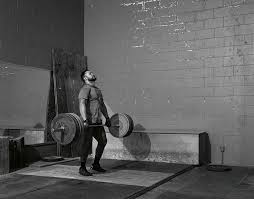
Because the use of categorising photography promotes clear organization, it is possible for the process to be clumsy at times and not account for maverick artists who wish to force aspects of their work outside the usual conventions. The OCA course notes promote the need for photographers to not get bogged down with being too exact in selecting a genre. By observing photographers who straddle across genres, I find an appreciation for work that constantly moves from a defined staged composition to one that leaves the viewer in limbo unclear of the interpretation being near – documentary or photojournalism.
References
BATE, D. (2016) Photography, The Key Concepts, Bloomsbury Publishing, London
W ART , Jeff Wall, 2019 (Online) (Viewed Sept 12 2019, Available from https://wsimag.com/art/55690-jeff-wall
Psychogeography
Is it possible to produce an objective depiction of a place or will the outcome always be influenced by the artist. Does it even matter?
Creating certainty with regard to objectivity in photography is generally extremely hard to define . Unconscious bias, previous experiences and exposure to an array of visual medium over many years is always going to dilute level of objectivity. Psychogeography does lends itself to working with a broad mind and an air of freedom and you would suspect that if complete objectivity were possible, this style of photography would be well suited to provide it.
Having walked through areas unknown to me, anticipating new visual experiences to open up before my eyes is both exciting and engaging. It is not however, a process that is decision free. Unless you roll a dice at every turn, a decision is made on direction, whilst aesthetics and interpretation prior to taking a photograph require a preference. Being detached from reality to the point that you can absolve any influence
The subjective qualities held within photography are accepted as part of the reason we choose to view an individuals view an artists work. There is an acceptance upon viewing photography that requires a level of empathy to try and guage what the artist is showing you and to engage with the inner workings of the artists mind. To remove this would render the camera into a machine without foresight, past or present knowledge and dismisses the human thirst for intrigue away from the ‘why’ aspect of a photograph.
 Gerard Hilderly Level 3 OCA