Notes on Otherness

Photography as a Critical Practice – David Bate

Otherness in contextual practice

Overall I found many of the essays within the book were unable to provide a salient argument. Although Interesting and highly relevant to my research, the essays took a fairly wide view of ethics, otherness and subjective perspective, all of which lacked the direct challenge that the subject needs. The areas that were significant to my understanding were the passages on Identity and responsibility for public perception. The subject of Power and empathy is such a telling factor within social documentary photography that it sometimes requires a direct approach to unravel all the parts with a forensic touch. Taking a wide academic approach can skirt around the issue without ever establishing where photography has fallen foul and advanced the very attitudes that it now reflects upon; I may have to re-read as It is possible I am guilty looking too hard for arguments that support or oppose my central question in the extended project.

David Bate refers to ‘otherness’ as a form of alienation of Identity and observes that by identifying otherness we are being ‘other’ to ourselves. Although this appears a little confusing the theory opens up by commenting on the way we project our own identity onto others. This is an area I have often considered within subjective bias and personal/political ideology. Bate calls this an internal foreign dynamic and has little to do with the exact appearance of the external figure and yet can find themselves the recipient of this internal ‘other’. We have to consider what we admit as other to ourselves.

I have read a similar text regarding colonialism in Daniel Blights ‘The image of whiteness’. The sense of our own visual understanding has to be established. How do we see skin colour ourselves, before projecting our subconscious or conscious thoughts upon others.

I have read sections of the essays within this book. Some sections are a little  more challenging than others, however, the introduction is extremely valid and poignant within the realms of my extended project           

Within the chapter ‘Critical Practice’ there is an observation about the way in which children are used to represent a sign of innocence as a victim and aligns this to a consensual representation which forms a social picture of society. Within my research I have looked at ways in which photography may have been partly responsible for the media’s perception of negative attitudes towards poverty. Bate looks at the use of children to signify destitution as a damaging way to form a social picture and force public opinion, Bate refers this to a type of collective representation that constitutes the  semantics of reality      

The theme continues in the fourth chapter where  Photography’s part within a colonial vision is  questioned and whether there is justification to propose that the art form advanced attitudes. The colonial gaze is certainly addressed, although spends considerable text describing the authenticity of three photographs. I am not entirely sure what this adds to the understanding of otherness or colonial power.

There are implied notes on the level of superiority cast upon the subjects, although the chapter on Colonial vision felt a little light on colonial stereotyping and ethnography. There appears to be a reluctance to be self critical about photographs part in dehumanizing whole cultures, and this particular essay felt as if it were treading on eggshells too much.        
Photography Against the Grain

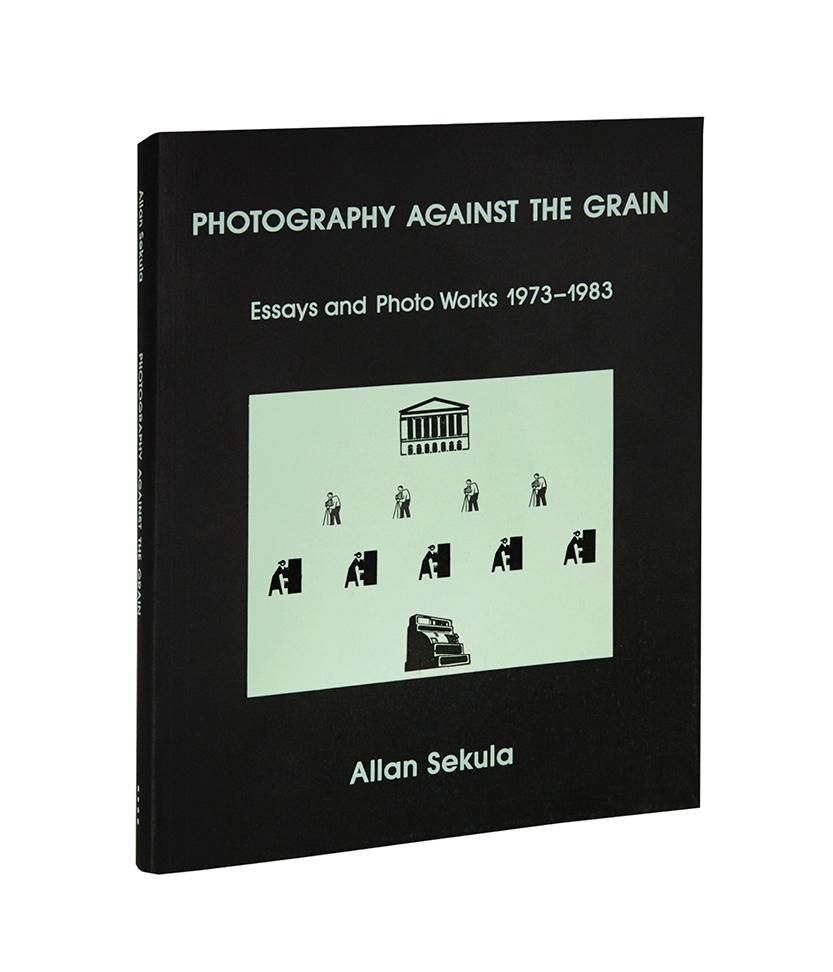
Having re-read Allan Sekula’s  Photography against the grain,  I spent some time reflecting upon the salient points whilst also observing his major projects.

When I received a copy of essays over a year ago I observed Allan Sekula’s understanding to documentary photography  to feed into the relevant points within my Literature review, although found the complexity of some of the arguments rather difficult to appreciate. On second viewing with fresh eyes, I discovered a level of importance and significance to my own understanding.

The essay ‘on the invention of photographic meaning really homes in on the construction of a narrative within the frame whilst always referring to the socio-political angle as to why a photographer chose to select a characteristic, an environment or particular class of subject. Little is left to chance and Sekula decodes and disseminates the many aspects that make up a construction and leads it back to the photographers motivation.

Sekula has a ever present difficulty with modernism and tradition. It appears to me that this is  a substantial element within the heart of his position as to how documentary photography should be undertaken if it is to be considered a serious visual force within the everyday existence of reality.

It certainly suggests an opinion that is not afraid to look left, when all others are following a desire to go right. It challenges power, tradition and what has gone before. Sekula feels this is part of the role of photography, to brush against the grain.

Documentary photography is seen as a compelling visual instrument to document the facts of social relations while opening a more metaphoric space to allow viewers the idea that things could be different. This can be achieved without exploitation through the beauty of the ordinary everyday reflections and observations.

Sekula has a self determination to portray the truth of reality which feed into areas of social injustice and exploitation. It appears that a significant aspect of Sekulas work and theory requires something or someone to rally against to make relevant. This is the area I am most fascinated with as since my focus has been predominantly towards documentary photography, I am constantly drawn to focusing on presenting a constructive reason to represent a situation.

I will be looking to obtain a copy of ‘Fish Stories’ to see how Sekula forms meaning within political consumption and how functional the accompaniment of text is within the overall meaning.

Studying and COVID19

A Selection of thoughts and creativity during Lockdown

I thought it would be helpful to note down my personal accounts to study during the ‘stay at home’ phase of the COVID19 crisis. which undoubtedly hampers the practical elements of my work, and yet the opportunity to think (although not without difficulty at times) provides both an expanding and consolidation of direction.

To sustain momentum along with other OCA students there commenced a collaboration of work designed to express creative thoughts during the lockdown. From my own perspective having spent much time homeschooling with my 8 year old daughter, an idea took shape that was worth exploring.

An idea that stemmed from listening to the rhetoric from Media and Government in relation to the pandemic provided an opportunity to display the language into something visually descriptive. Phrases that referrer to WW2 were becoming more apparent and in my mind, rather alarming. If this was to be portrayed as an enemy, it was an enemy that needed we needed to be protected from rather than the ‘gun ho’ suggestion of confrontational words such as ‘Take it on the chin’, ‘Blitz Spirit’. I found this language bizarre. What would language this look like visually in context to the current crisis?

The concept provided much scope as I viewed the effects of loneliness during the Lock down. How would war time rhetoric be visualised in such circumstances?. I found the 1940’s mantra’s unhelpful and thought of ways to represent the elderly, living alone whilst being fed uplifting messages designed for comradeship and togetherness rather than isolation and reclusiveness.

I created a number of these staged dolls house representations and captured via an ipad (two methods I would never usually entertain, particularly the staging). This prompted further thought and possibilities that I would have not previously considered.

The Group thought the work was inventive and displayed elements of dark humour that provided insight into my thought processes via the vehicle of an idea initially sprung from my 8 year old daughter.

‘During Moments of Crisis, its always the poor who get clobbered’. Don McCullin

Read more

Martin Parr talk

Previously to listening to Martin Parr, I would generally describe his photography as honest portrayals of British life, with an tinge of crassness, mischief and humour in equal measure. I don’t believe I could give an accurate account of Martin Parr’s personal motivations as to his primary intentions and aims. The opportunity to hear a photographer explain their rationale through the prism of such a vast back catalogue of work was a great opportunity for most photography students, especially those exploring social documentation.

Continue reading “Martin Parr talk”